

On the Umbrella House and the quiet radicalism of Kazuo Shinohara
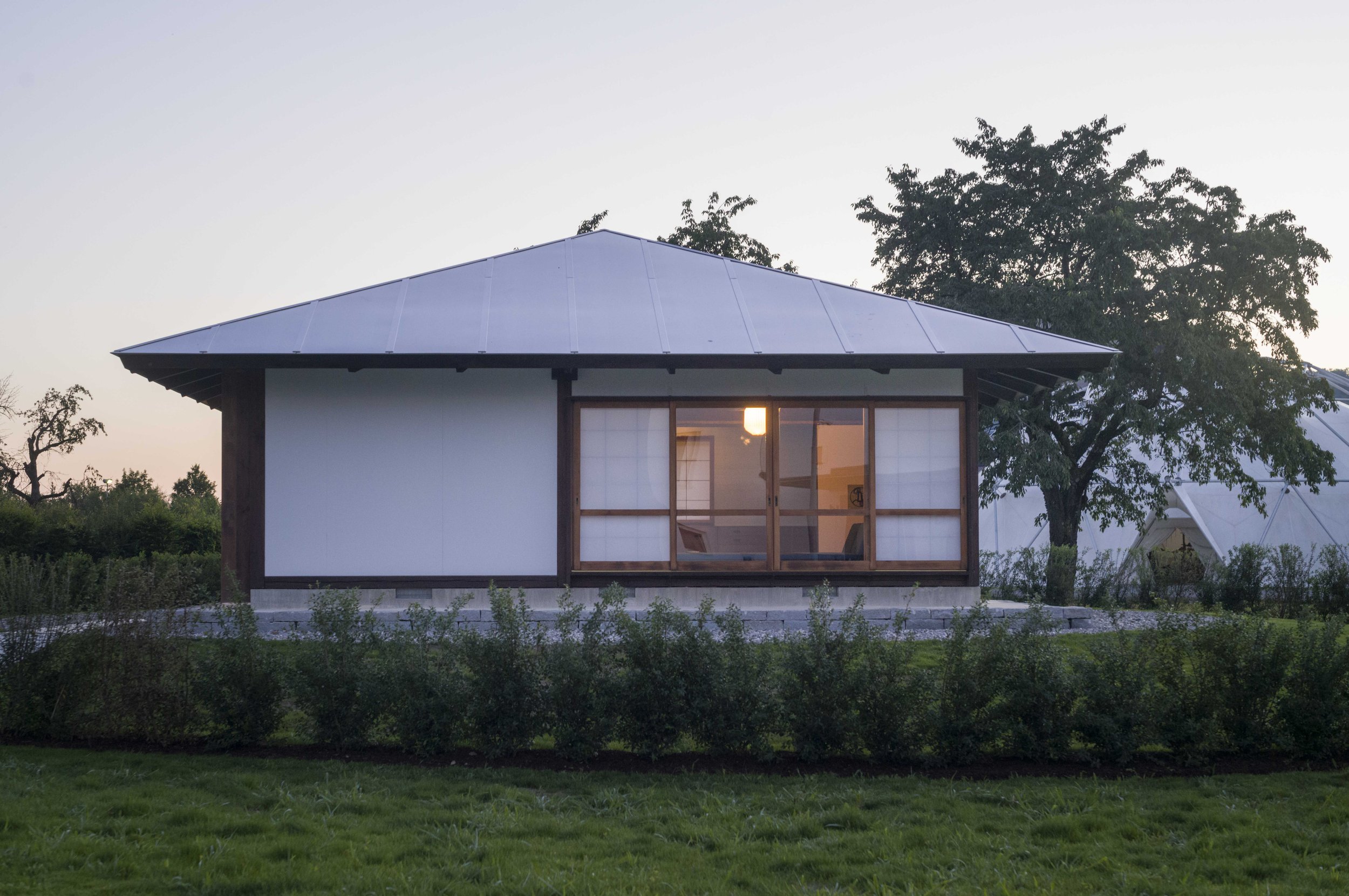
Umbrella House, Vitra Campus, June 2022. © Vitra, photo: Julien Lanoo.
Kazuo Shinohara is considered one of the most important Japanese architects from the latter half of the twentieth century, but is still little known internationally. That obscurity makes the Umbrella House, now standing on the Vitra Campus in Weil am Rhein, one of the more quietly urgent things to seek out in contemporary architecture.
Built in Tokyo in 1961, the Umbrella House draws on traditional vernacular architecture of Japanese homes and temples, transferring motifs to residential construction for the first time. The pyramid-shaped roof form had previously only been seen in temple complexes. Shinohara called this conviction simply: a house is a work of art. At 55 square metres, it earns that claim through compression rather than spectacle, the way a Haiku earns attention through what it removes.
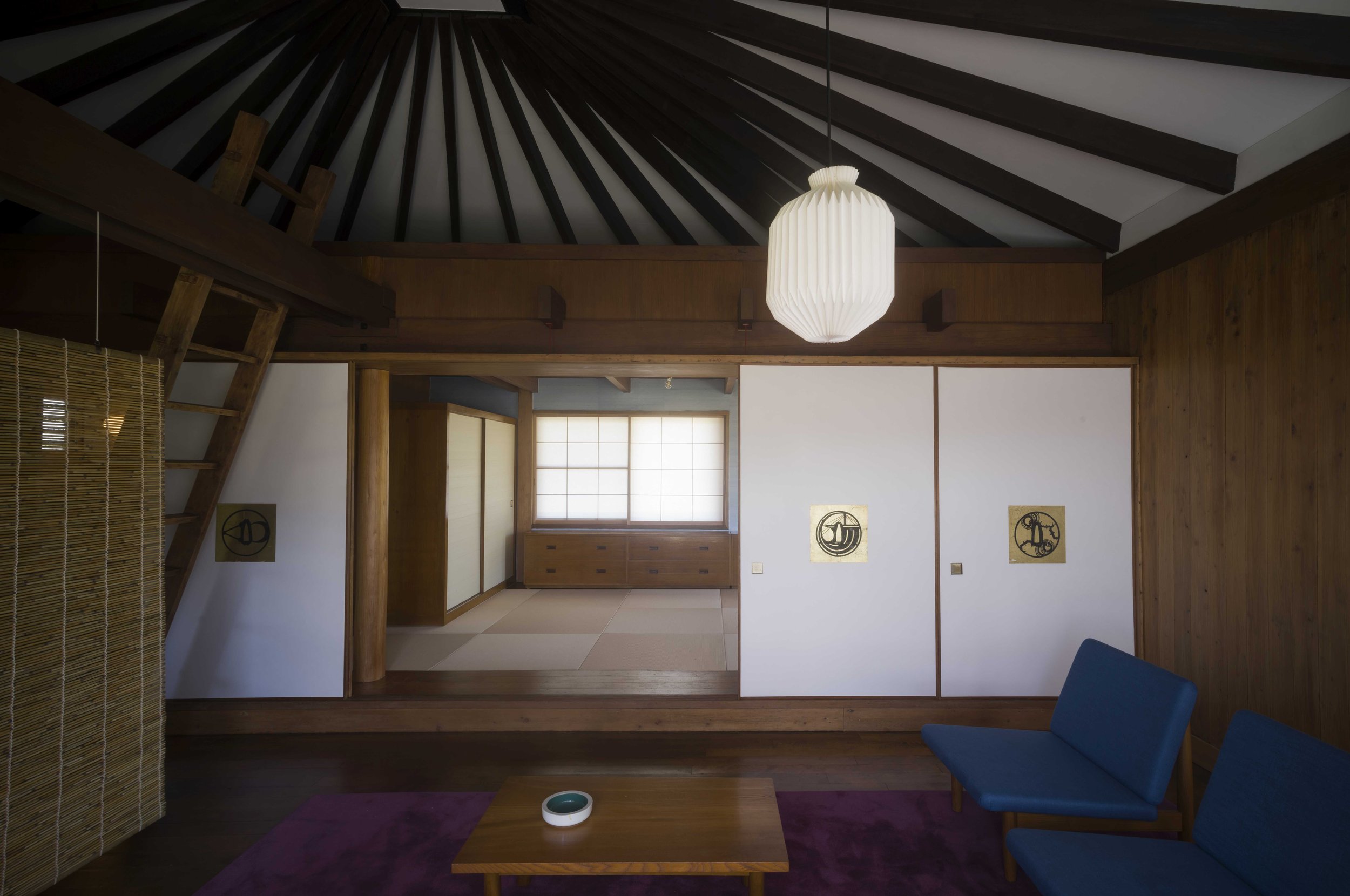
Umbrella House, Vitra Campus, June 2022. © Vitra, photo: Julien Lanoo.
Inside, the tatami room sits slightly raised, separated from the living space by sliding doors. The whole interior is held in warm wood, the kind of material decision that refuses to perform. Nothing here is decorative. The furniture, designed by Shinohara and Katsuhiko Shiraishi, sits on the floor as if it grew there.
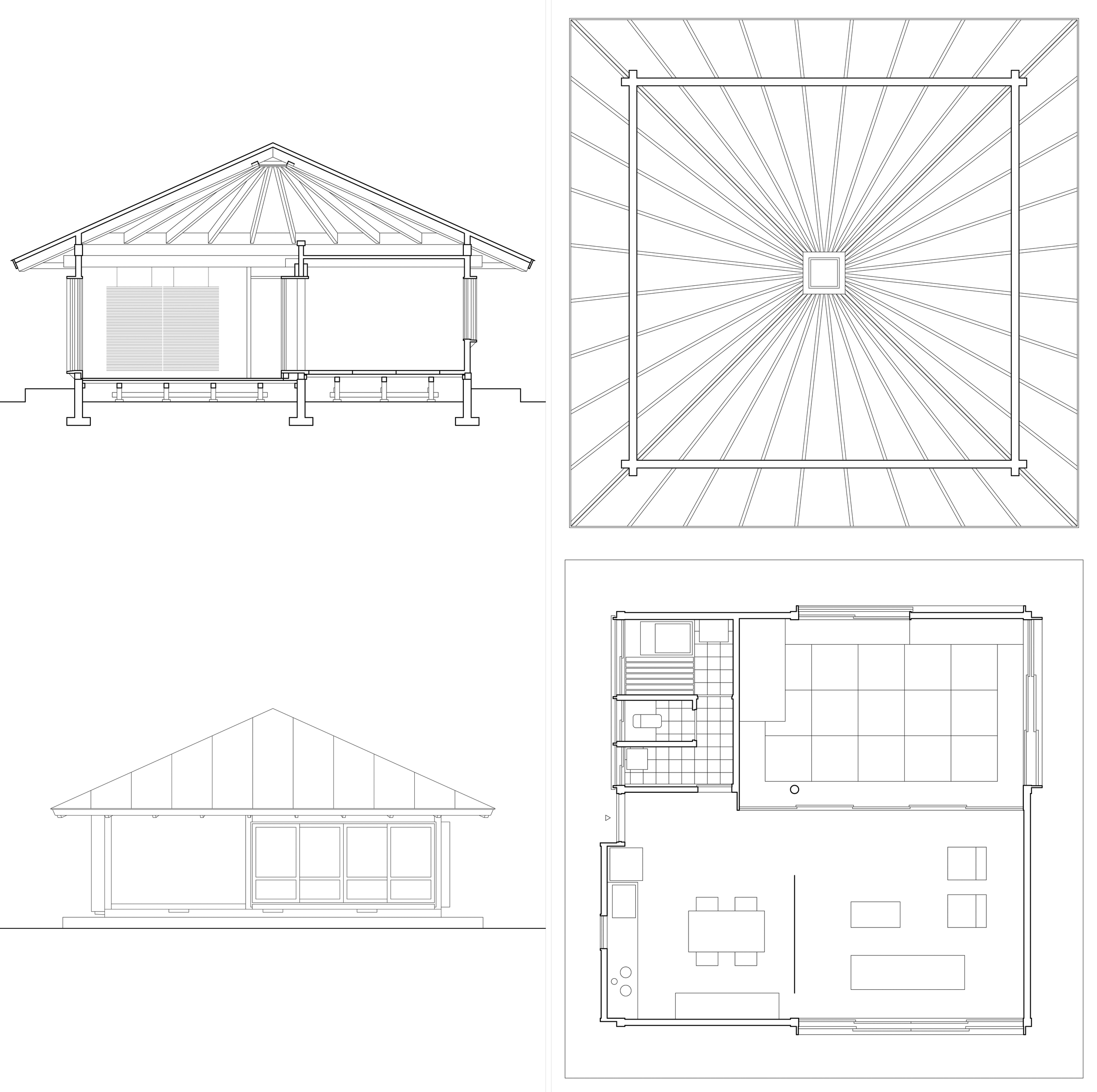
Blueprint Umbrella House. © DEHLI GROLIMUND. All plans redrawn from original working drawings, verified against originals on behalf of the Kazuo Shinohara Estate.
The plan confirms what the experience suggests. Seven by seven metres. Everything resolved within a square. When a highway threatened to erase it, Kazuyo Sejima of SANAA contacted Vitra, who made it possible to disassemble the house in Tokyo and reassemble it in Germany. That a building this precise had to be rescued from demolition by a furniture company in another country says something about how architecture is valued, and how rarely the quietest buildings survive.