

Faces in Chalk: The Human Figure at Salon du Dessin 2026
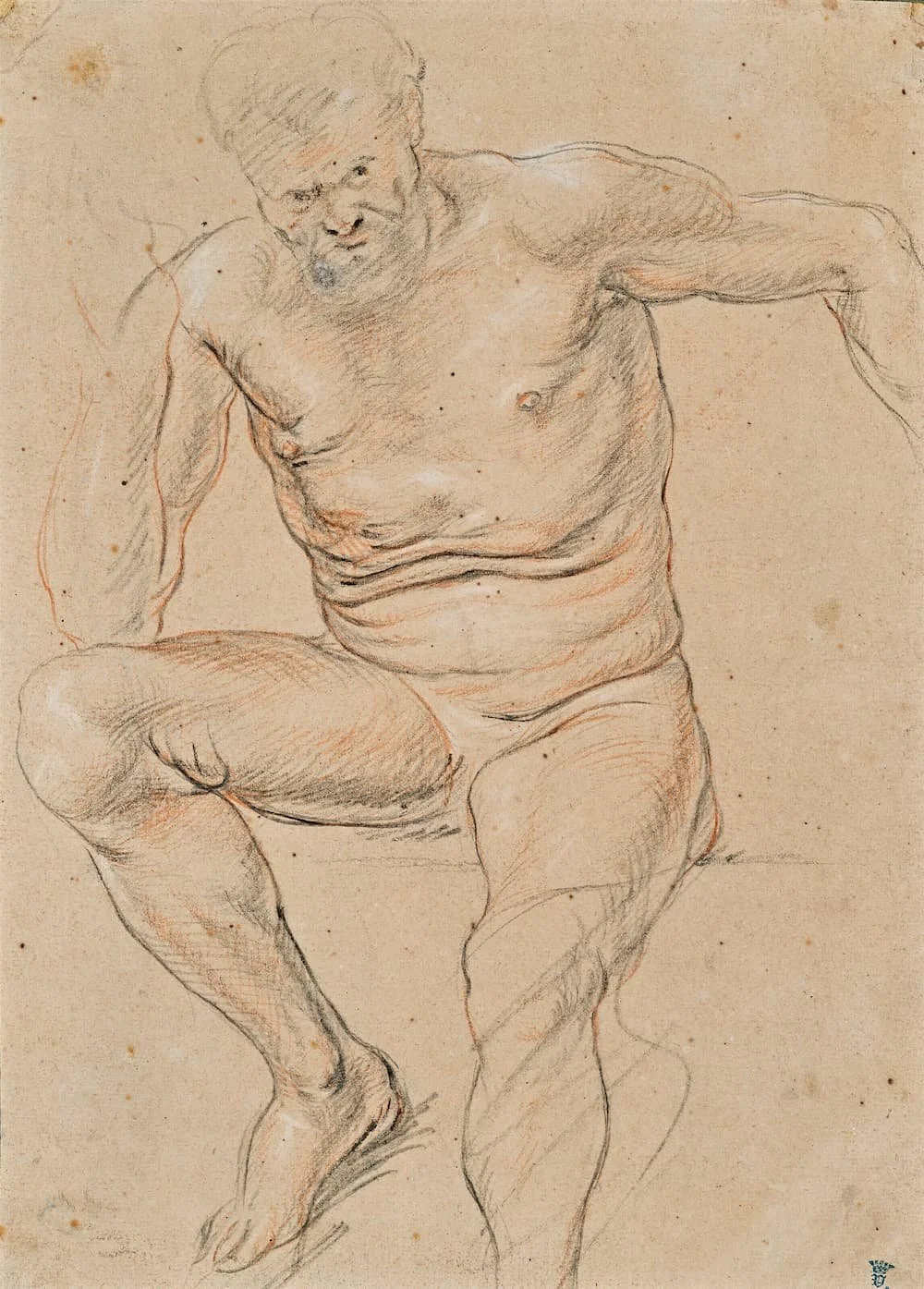
Jacob Jordaens, Academy of a Male Nude, black chalk, sanguine, white highlights, 273 x 197 mm. Courtesy Galerie Lowet de Wotrenge, Antwerp.
Every year in late March, the Palais Brongniart in Paris fills up with works on paper spanning five centuries. If you walk through the 34th edition of the Salon du Dessin slowly, something keeps pulling you back: the human body. Figures caught mid-pose, faces held still in a few strokes of chalk, bodies studied with the kind of patient attention that only drawing can hold.
Jacob Jordaens was a Flemish Baroque painter working in Antwerp in the 17th century, and his Academy of a Male Nude has the physical confidence you would expect from that tradition. The figure is built up in layers of sanguine and black chalk, turning slightly as if the model just shifted on the stand. It is a life study, the kind of drawing that was once considered a foundation of any serious artistic training.
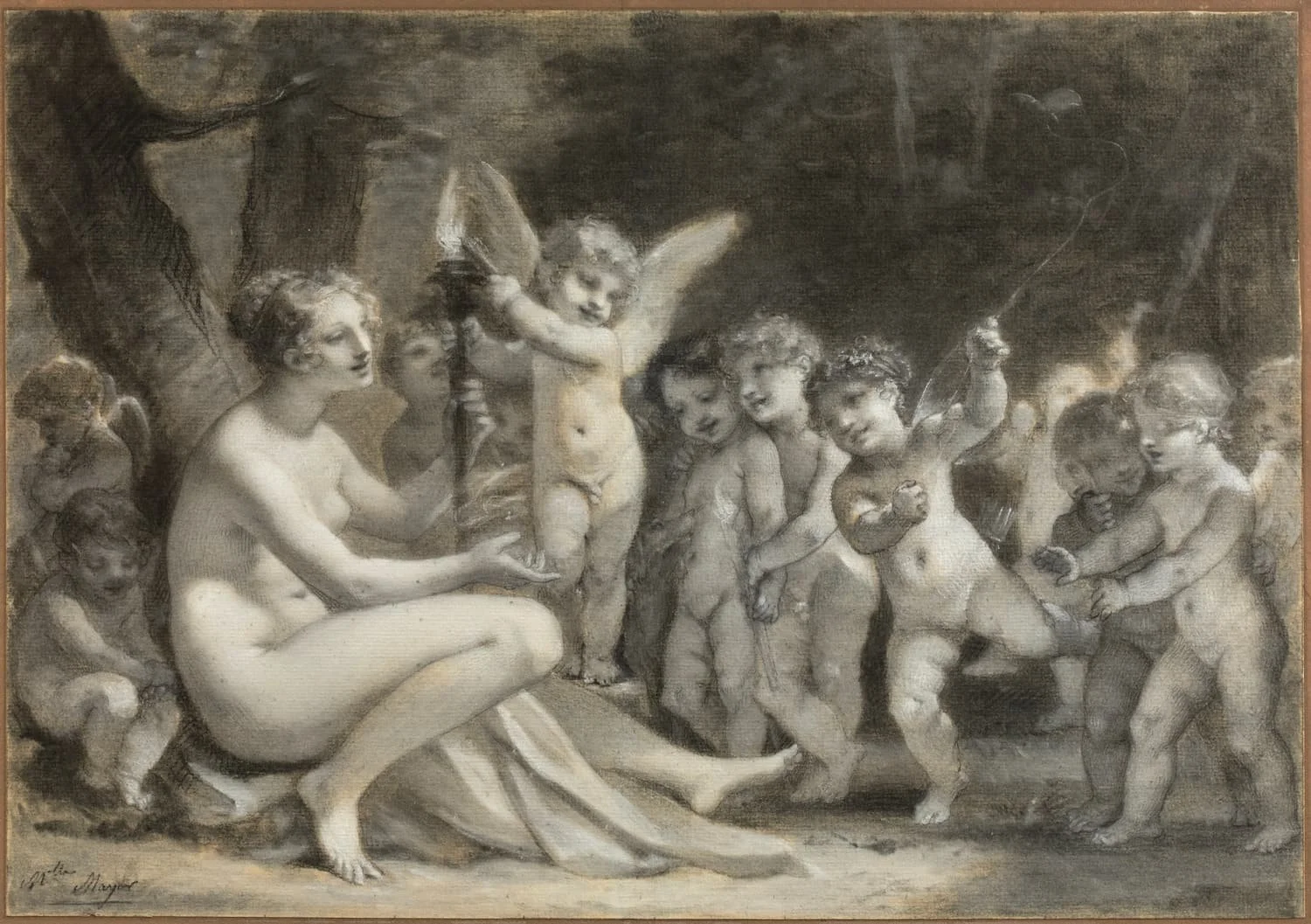
Pierre-Paul Prud'hon, The Torch of Venus, black and white chalks, stumping, on blue paper, 36.5 x 52 cm. Courtesy Galerie de Bayser, Paris.
Pierre-Paul Prud'hon worked at the turn of the 19th century and his drawing The Torch of Venus is a preparatory study for a painting later executed by his companion Constance Mayer. What makes it worth stopping in front of is the blue paper, which lets the white chalk highlights do something a white ground never could. The figures seem to glow from within.
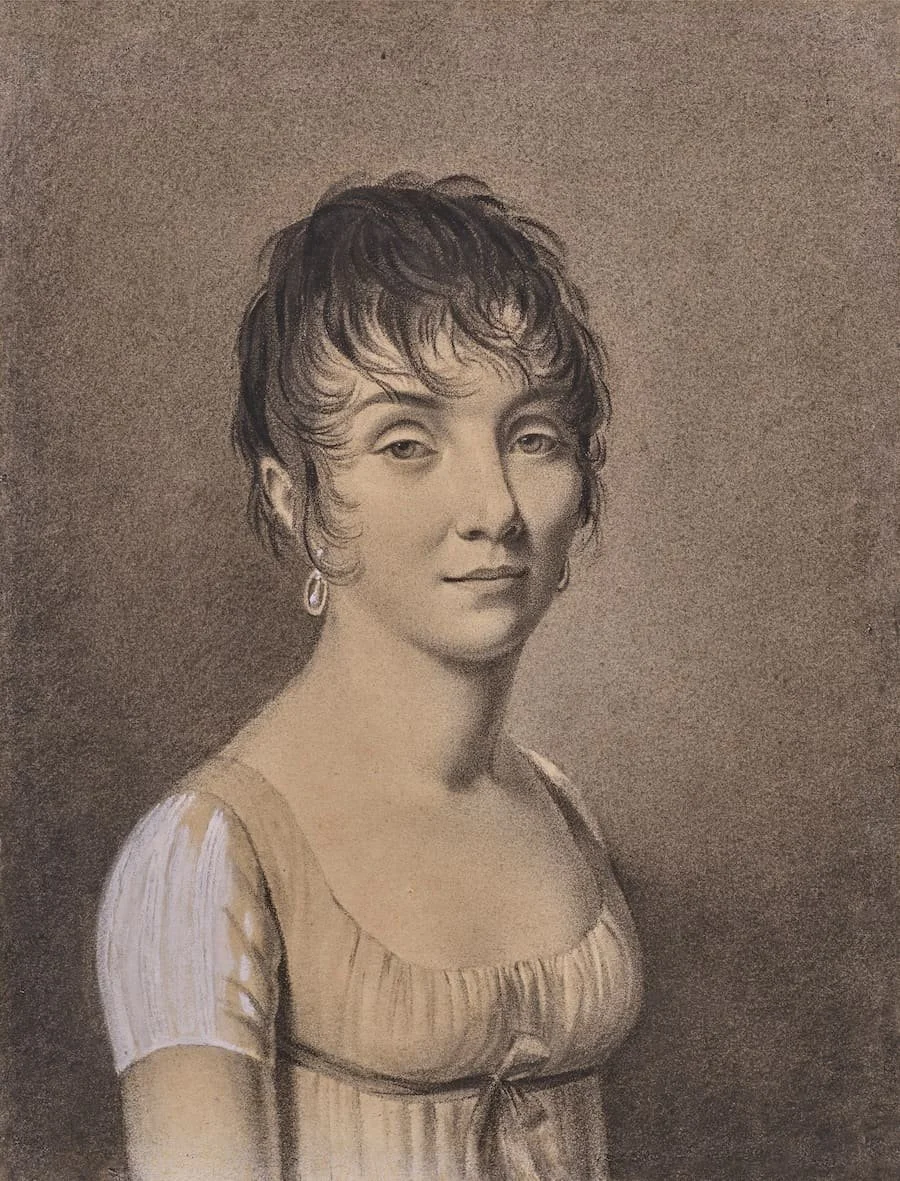
Louis Leopold Boilly, Portrait of Blanche Charlotte de Roncherolles, Countess of Ferragut, black chalk, stump and white highlights. Courtesy Didier Aaron and Cie, Paris.
Boilly was known for small, precise oil portraits, and this unpublished chalk drawing sits comfortably alongside them. The Countess of Ferragut looks out from the page with a directness that feels surprisingly modern. An old label on the reverse names her, traces her birth in Guadeloupe and her death in Paris in 1862. Without that label, she would just be a face.
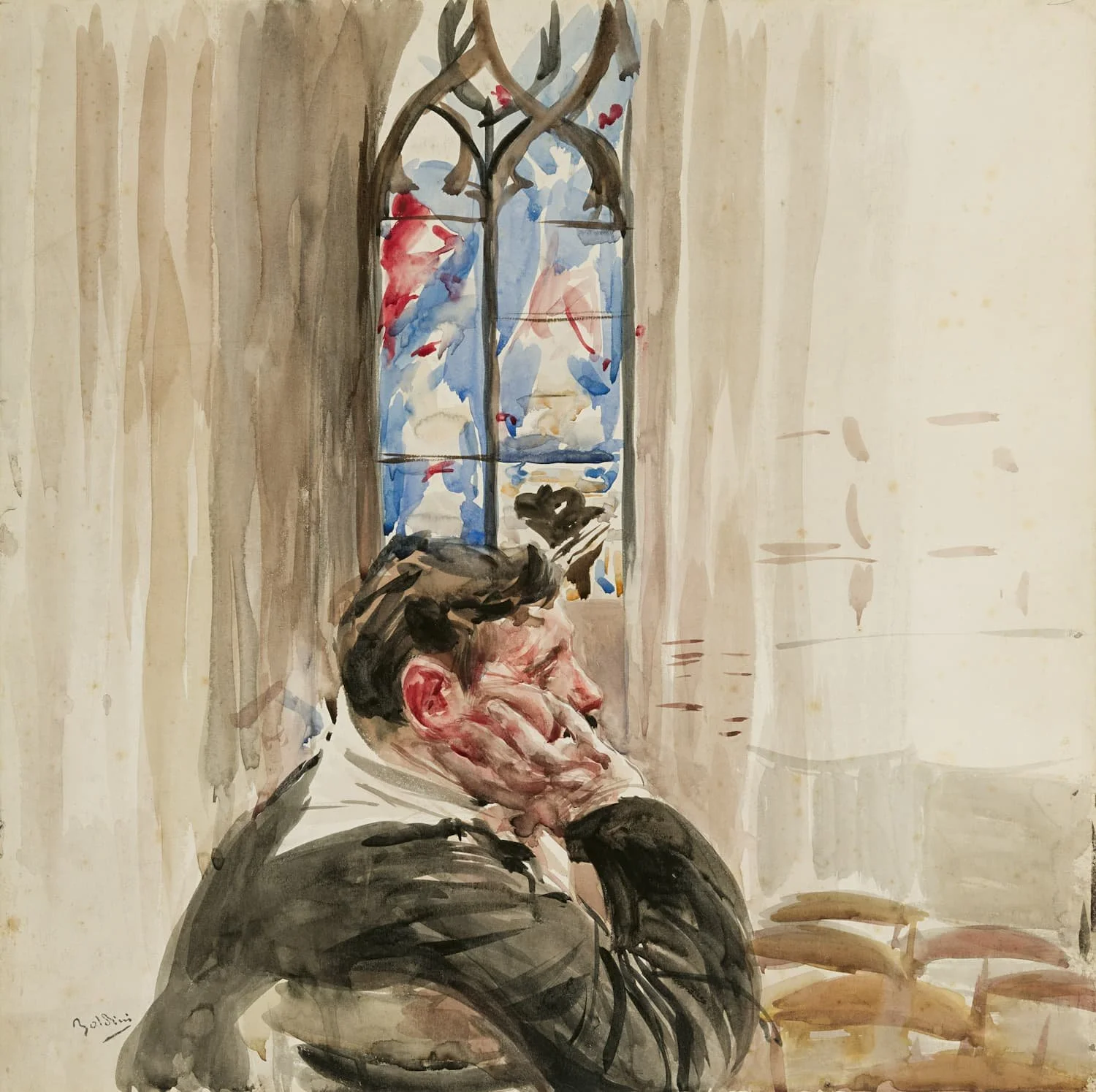
Giovanni Boldini, Portrait of a Man Seated in a Church, watercolour, 449 x 450 mm. Courtesy Stephen Ongpin Fine Art, London.
Giovanni Boldini was an Italian painter who spent most of his career in Paris and became one of the great portraitists of the Belle Epoque. This watercolour of a man seated in a church is looser and quieter than his famous oil portraits, the brushwork open, the figure almost dissolving into the space around him.
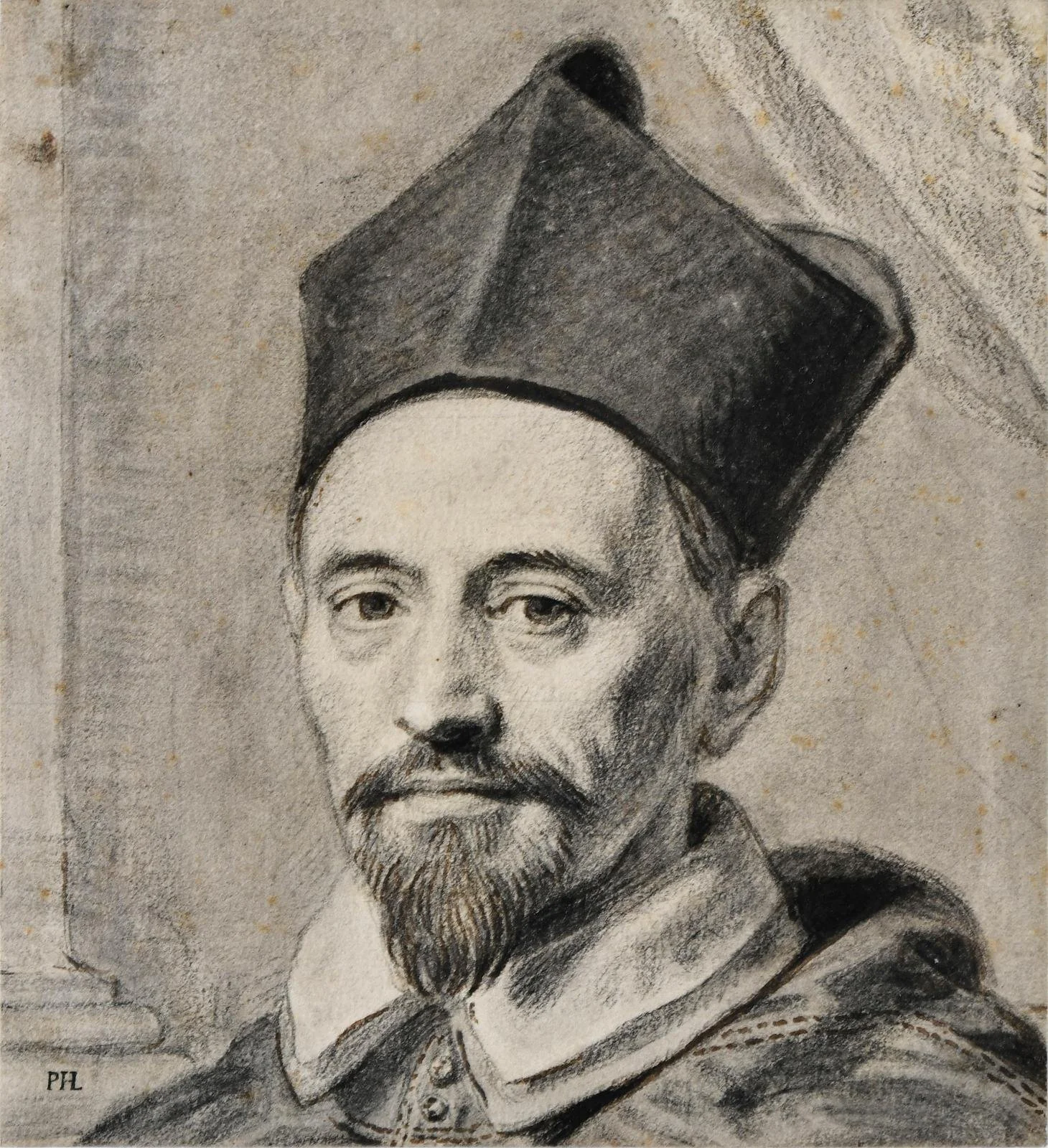
Cornelis Visscher, Portrait of Philippus Rovenius, black chalk, white highlights, brush and wash, 130 x 117 mm. Courtesy Galerie Lowet de Wotrenge, Antwerp.
The smallest work here may be the most arresting. Cornelis Visscher was a Dutch Golden Age draughtsman known for his portrait drawings, and this image of Philippus Rovenius has a physical solidity that is hard to achieve at this scale. It also feels like a good place to mention something the fair introduced this year: a dedicated stand for drawings whose authors remain unknown. Visscher is named, and Rovenius is named, and we know the label on the back of the Boilly. But somewhere in the Palais Brongniart this spring, other drawings hung with no name attached to either the maker or the sitter, waiting.
The Salon du Dessin runs annually each spring in Paris. More information at salondudessin.com.