

The grammar of impermanence: Jane Yang-D'Haene
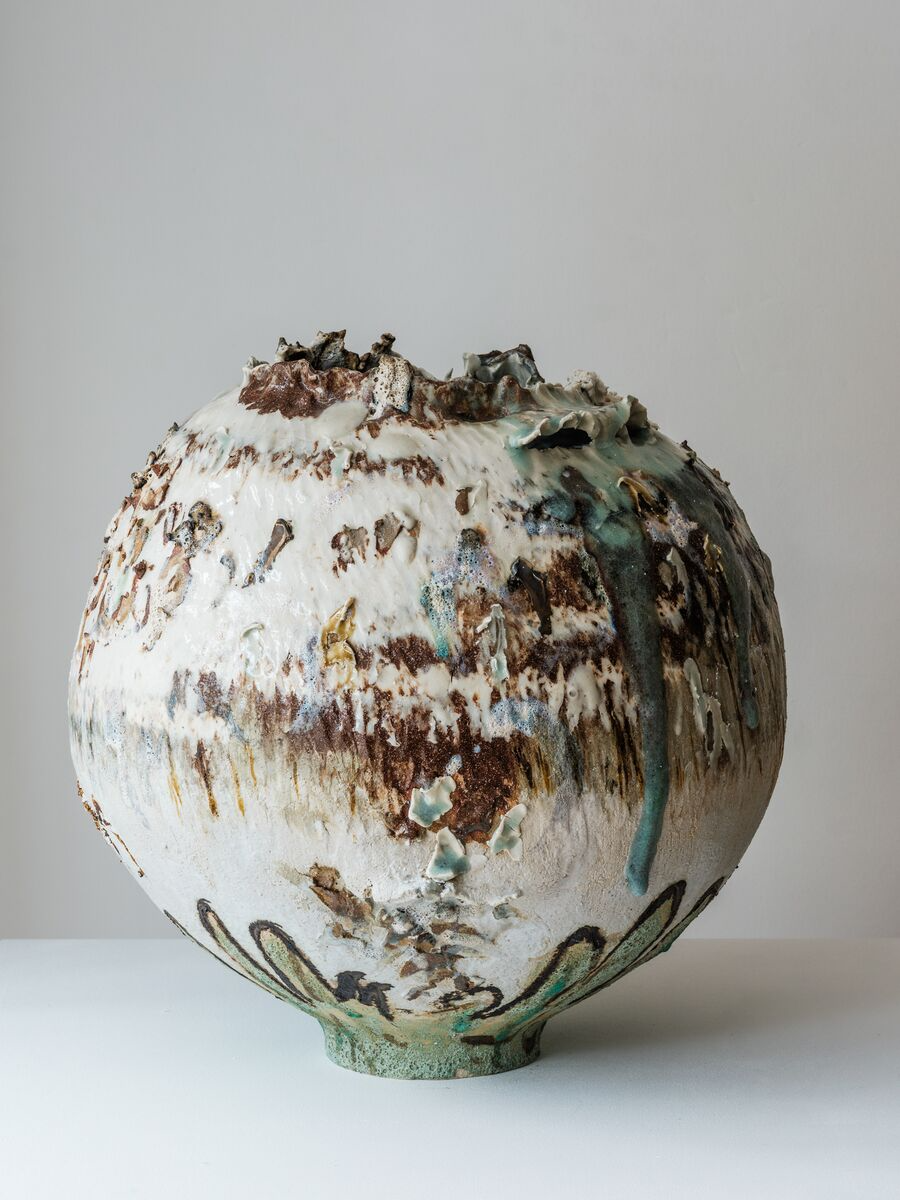
Jane Yang-D'Haene, Untitled, 2024. Courtesy Hauser & Wirth. Photo: James K Lowe.
Jane Yang-D'Haene was born in South Korea and moved to New York in 1984, where she studied at the Cooper Hewitt School of Architecture and later worked as an interior designer. She turned to ceramics in 2016. Her work is rooted in the tradition of the dalhangari, or moon jar: historically two hemispherical halves of porcelain joined and fired into a single globe, prized across the Joseon Dynasty for the gentle asymmetries that accumulated in the kiln. She does not replicate this form so much as disrupt it, cutting into wheel-thrown vessels, layering glazes, and allowing the kiln's atmosphere to finish what her hands begin.
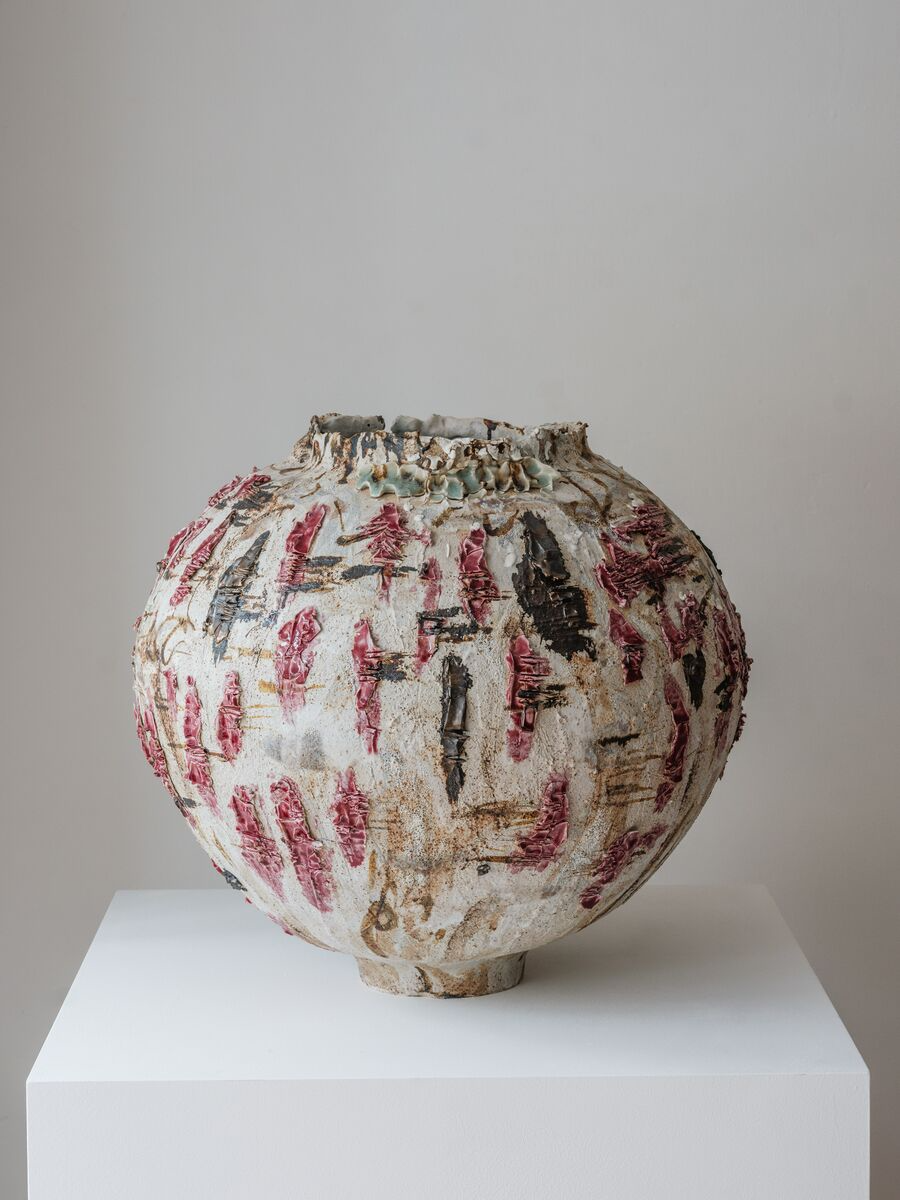
Jane Yang-D'Haene, Untitled, 2024. Courtesy Hauser & Wirth. Photo: James K Lowe.
The surfaces read like watercolour: iron oxides and ash glazes bleed and pool across white slip in ways no brush could govern. This is the logic of Song Dynasty Jun ware, where copper-red to lavender transformations caused by kiln atmosphere were understood as the point rather than the accident, and of wabi-sabi, the Japanese philosophy that finds beauty in imperfection and transience. Yang-D'Haene describes some finished vessels as unfinished. Flaws are not incidental; they are the work.
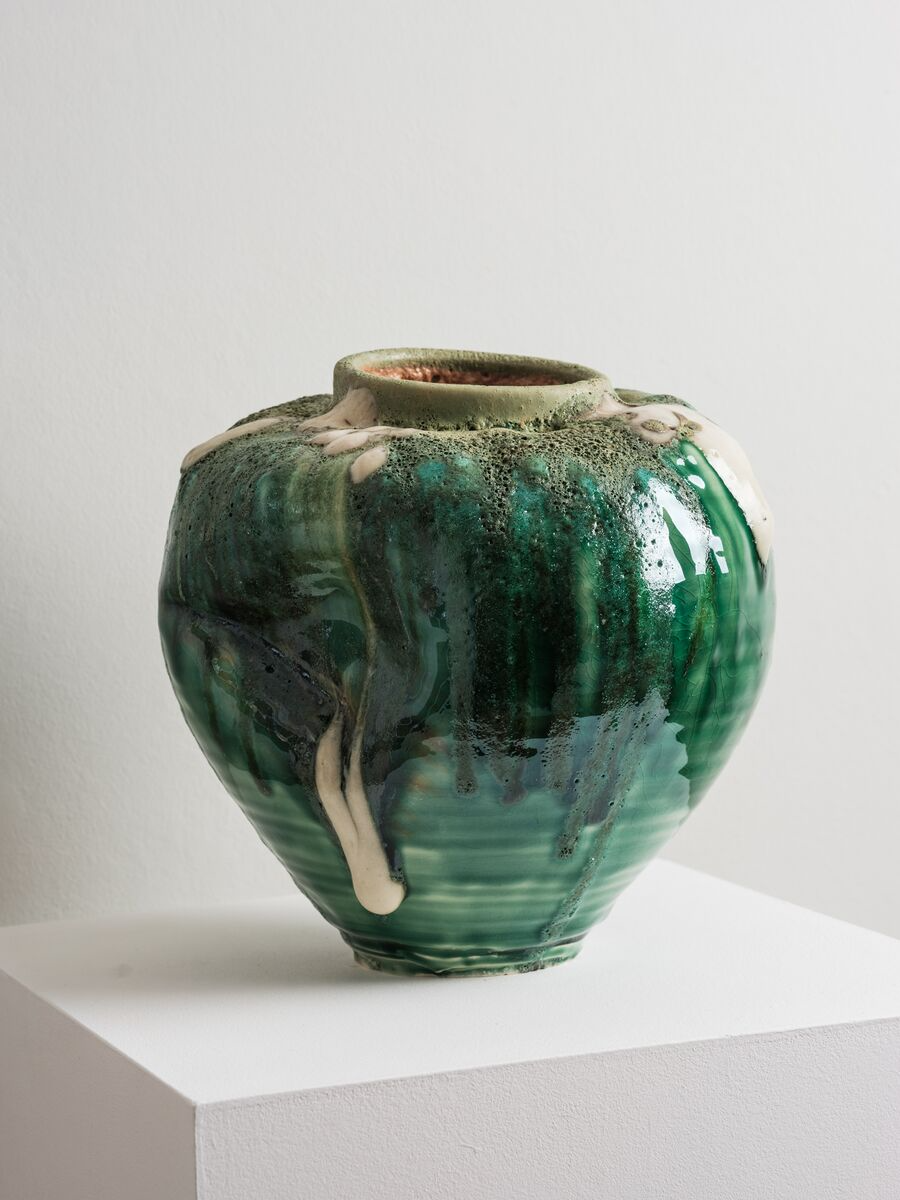
Jane Yang-D'Haene, Untitled, 2024. Courtesy Hauser & Wirth. Photo: James K Lowe.
In a moment when so much is performed for legibility, Yang-D'Haene's pots insist on their own opacity. They are not messages. They are presences, each one holding its silence the way a vessel holds air, fully, invisibly, and with no obligation to explain.
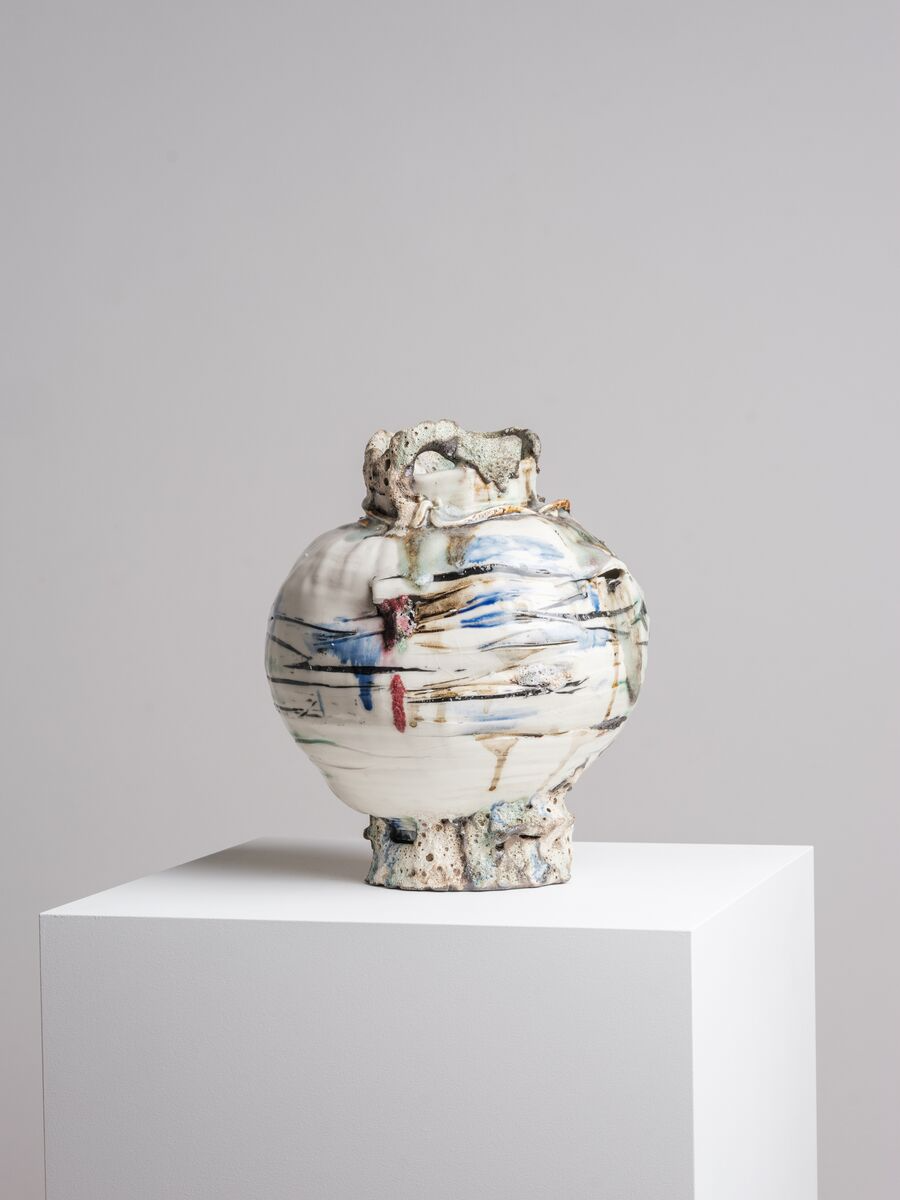
Jane Yang-D'Haene, Untitled, 2024. Courtesy Hauser & Wirth. Photo: James K Lowe.
The horizontal streaks of blue, black and red moving across this globe recall the tradition of painting directly onto ceramic surfaces that runs from Chinese literati ware through to the Mingei movement in Japan. The vessel becomes, briefly, a landscape.
Jane Yang-D'Haene, Beauty Lies Within, Make Hauser & Wirth Somerset, 26 May – 28 July 2024.